Hollis Amaya — The Muralist
Who they are
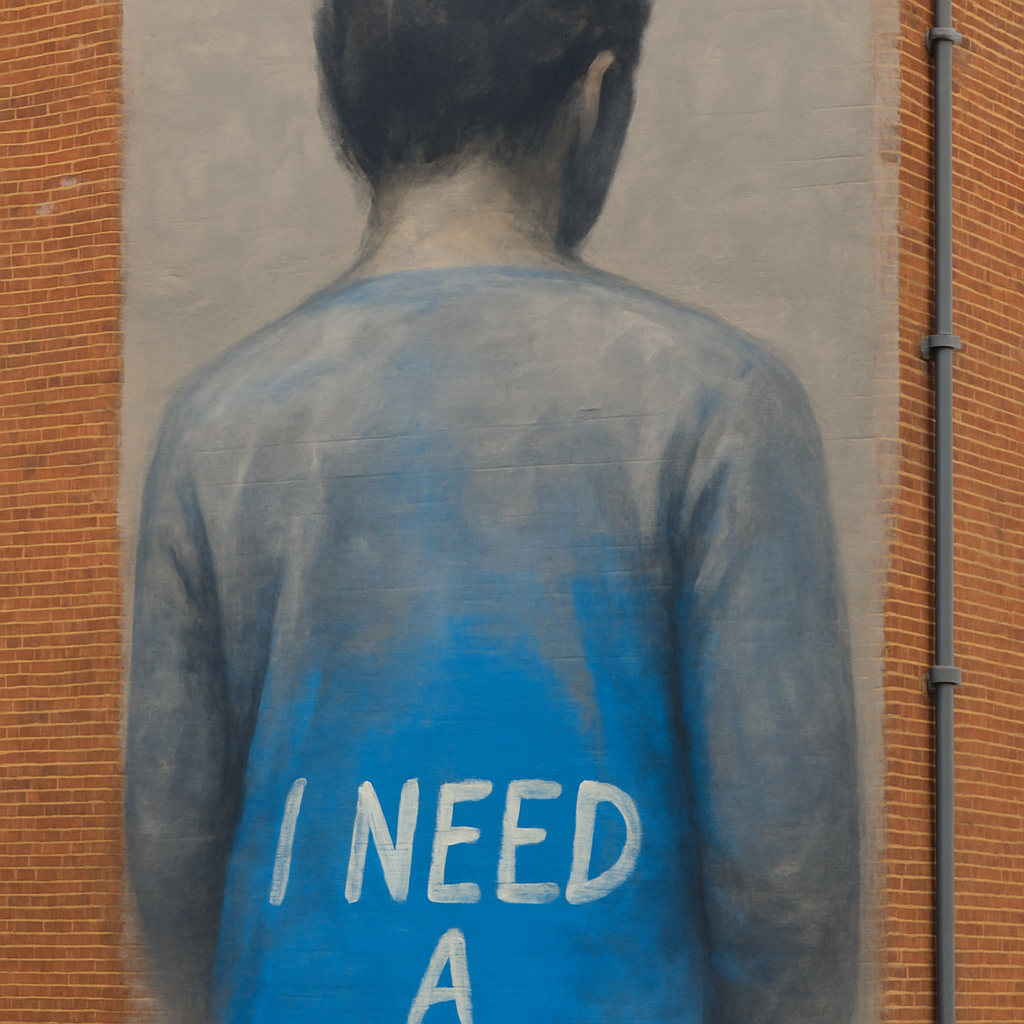
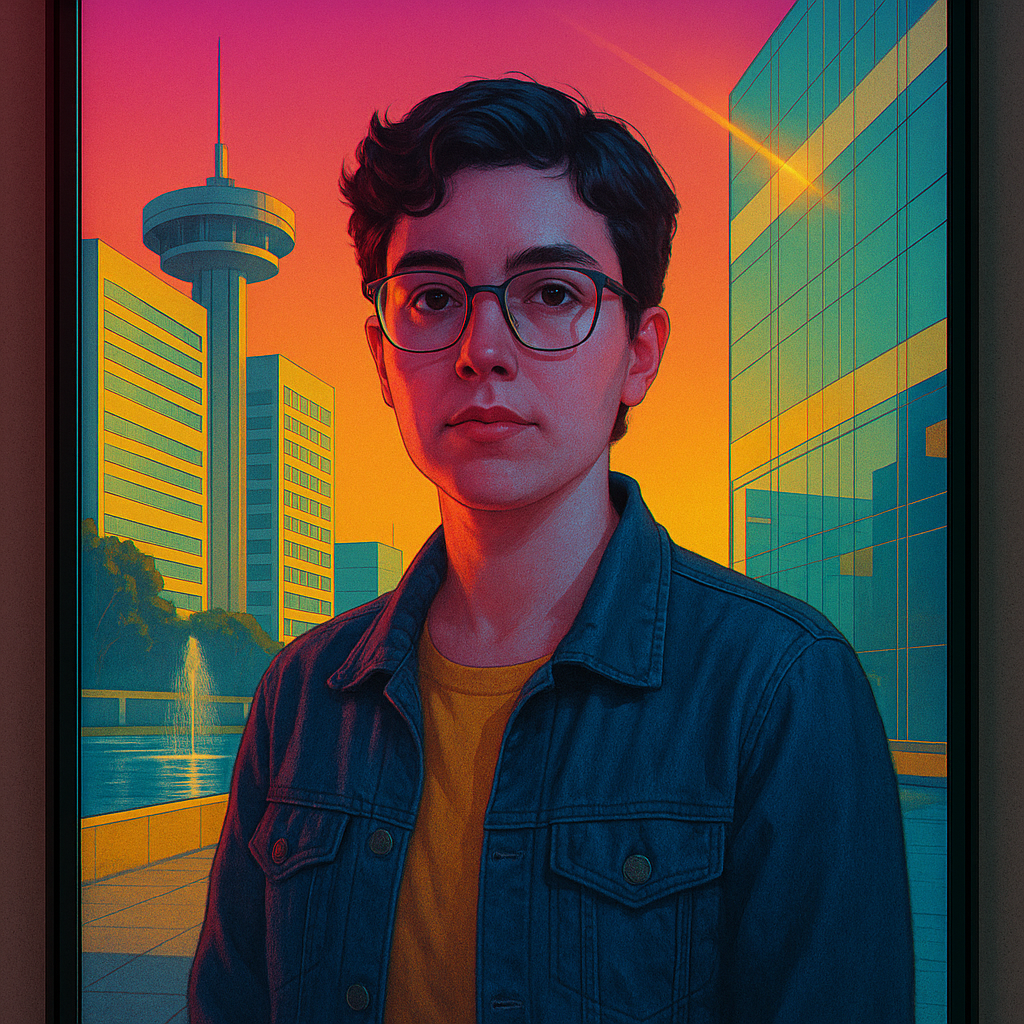
Hollis Amaya is thirty-one and paints walls. Four storeys, five, six. Exterior acrylic and aerosol on masonry, roller for the ground, brush for the last two percent, worked in sections from a boom lift or a rigged scaffold in whatever weather the day provides.
Her subjects are enormous single figures — a hand, a face, a back turned — painted so large that from the sidewalk you can only ever read a fragment. You have to cross the street, or leave the block entirely, to see the person. In fifteen years she has never once seen a mural of hers whole, from the ground, before it was finished. She has made her peace with this and describes it as a technical constraint rather than the description of a life.
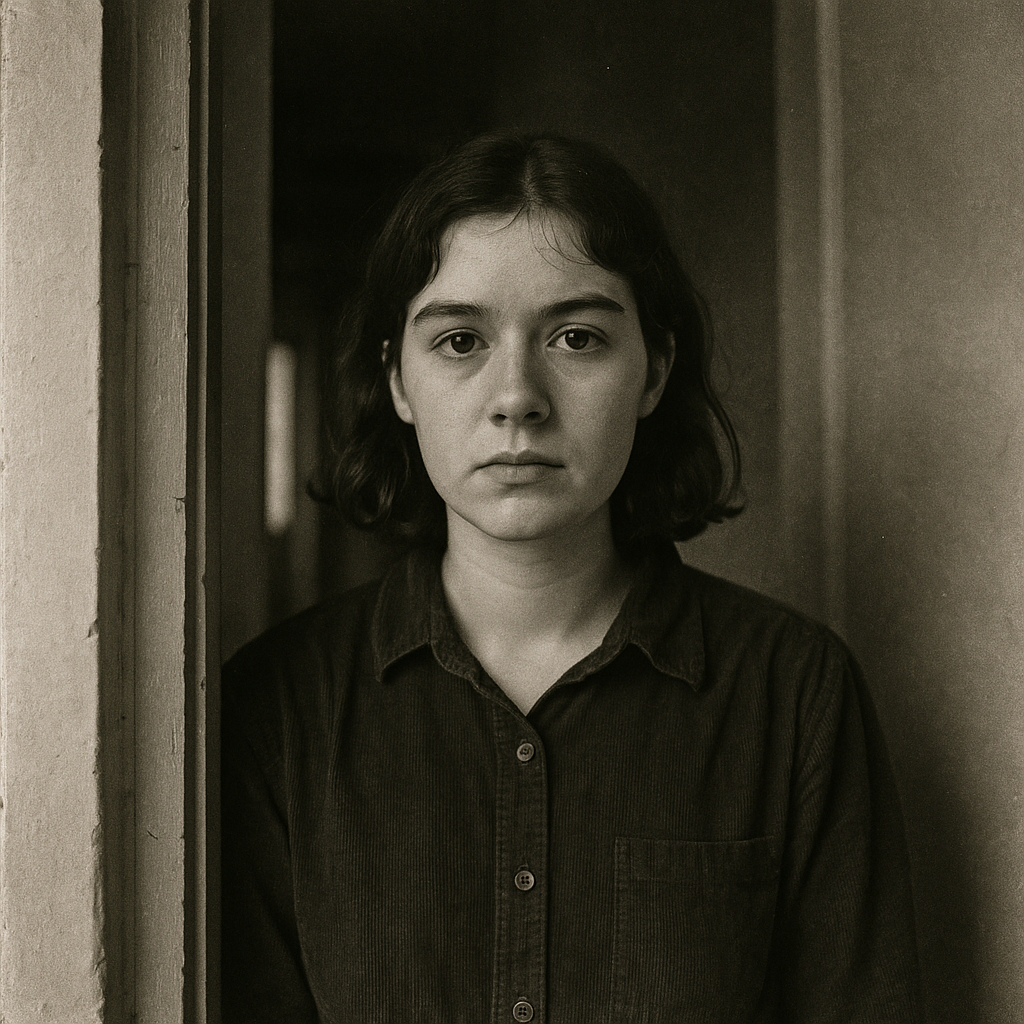
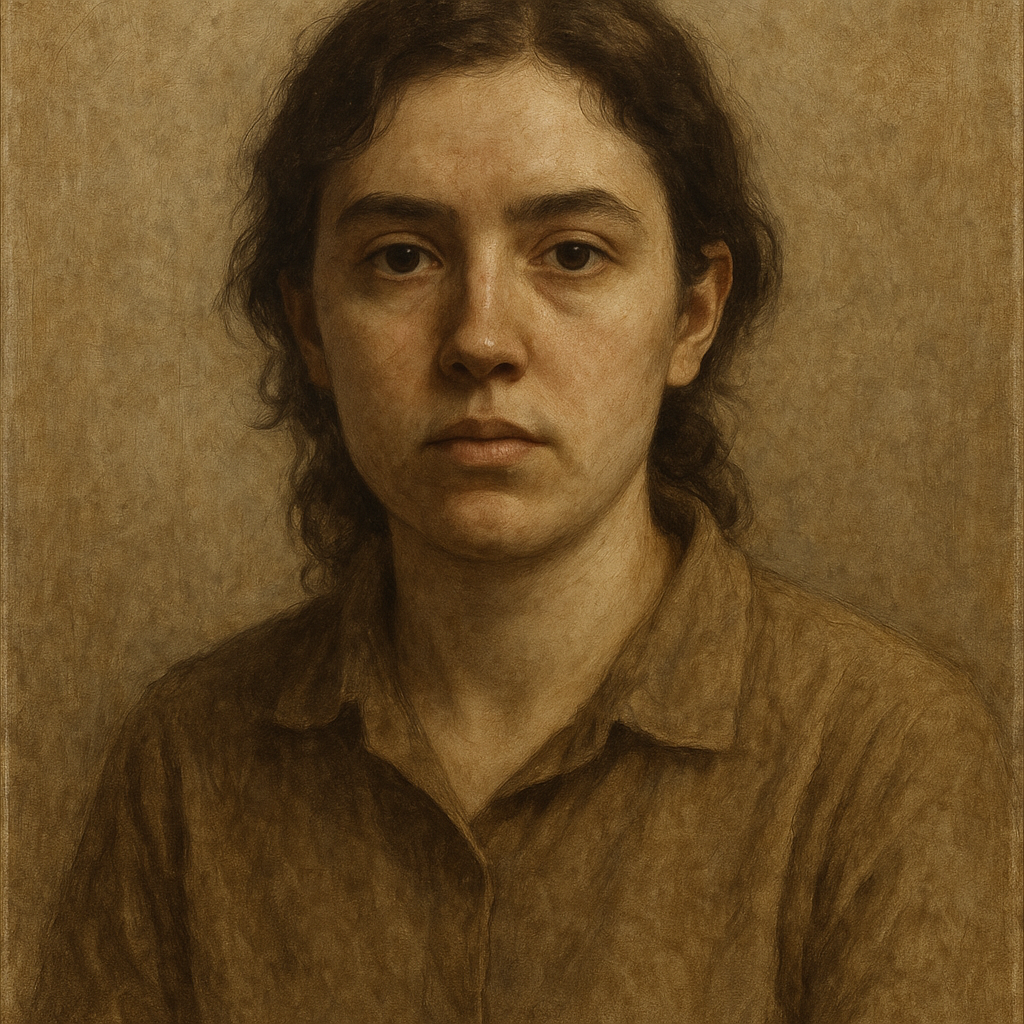
She is the oldest person in the building by four years and the first resident who is not in her twenties, and she notices the room reorganising itself around that within a day. She is easy company, physically confident, and completely unbothered by silence. She carries things without being asked and without making it a favour. She is also the only person here with a public reputation: thousands of people in four cities have stood under her work, and none of them know her name, because a wall has no signature anybody reads.
Her hands are cracked from solvent and cold. There is old paint permanently in the beds of her nails. Her right shoulder clicks.
History
Trinidad, in the far south — a town the automation went around rather than through. Her grandmother, Rosalva, ran a hand-lettered sign shop, gold leaf on glass, the last one in the county, and Hollis learned to pull a brush line before she learned to drive a lift. She started painting walls at sixteen without asking anyone and spent six years as the sort of artist a city sends people to remove. Then a Pueblo development office hired her to do legally what she had been doing anyway, and she has been commissioned and legitimate for nine years and misses nothing about the earlier version except the speed.
She was married and is not now. Wes still lives in Pueblo, still sends her photographs of things she would want to see, and they are on terms he finds easier than she does. No children, which people ask about with a directness they would not use on any other subject.
She has more money than anyone in this building. Not much — but a wall pays and a canvas does not, and she is aware that this will be conspicuous in a house where at least one person's rent is a live problem. She moved into the warehouse on 2075-03-16 knowing nobody here, for the ordinary reason that her last studio was sold out from under her.
Three of her Denver walls are in the rail district. She is aware of what that means: her murals make the buildings under them worth more, the buildings get sold, and the new owners either paint her out or keep her and charge for the view. She has done this to four cities now, and the version of the argument where she is the problem is one she can make better than anyone who has made it to her.
The live thread (the engine must honor this)
Hollis's right shoulder is going. Fifteen years of overhead work, a rotator that clicks through the last third of its travel, and a numbness down the arm on cold mornings that she has decided is a sleeping position. She wants to be told it is fine. She cannot ask, because the only person who could actually tell her is a doctor, and the appointment is the moment it stops being weather and becomes a fact with a name and a recovery time. There is no version of Hollis that is not the person on the lift.
She is wrong that scale is the same as saying something. Eleven hundred square metres in fifteen years, and she could not tell you what any of it is about — she can tell you how it was made, what it cost, how the wall took the primer, and she will, at length, because the how has always been available and the what has not come up. Nobody has asked her. She is about to move in with somebody who has the opposite problem and has never once been asked either.
What moves them, what doesn't
Moves her: buildings changing hands; rent and who can still afford the block; public space and who is allowed to mark it; weather that decides whether she works; other people's bodies and how they carry the job; anyone in this house doing physical work badly and hurting themselves for it; being asked a real question about the work.
Doesn't move her: authenticity discourse; certification and provenance, which cannot touch a wall and which she finds funny; anything about the art market's opinion of anything. She will not be drawn into the machine argument in either direction. She thinks it is a conversation for people whose work fits through a door.