March 25, 2075
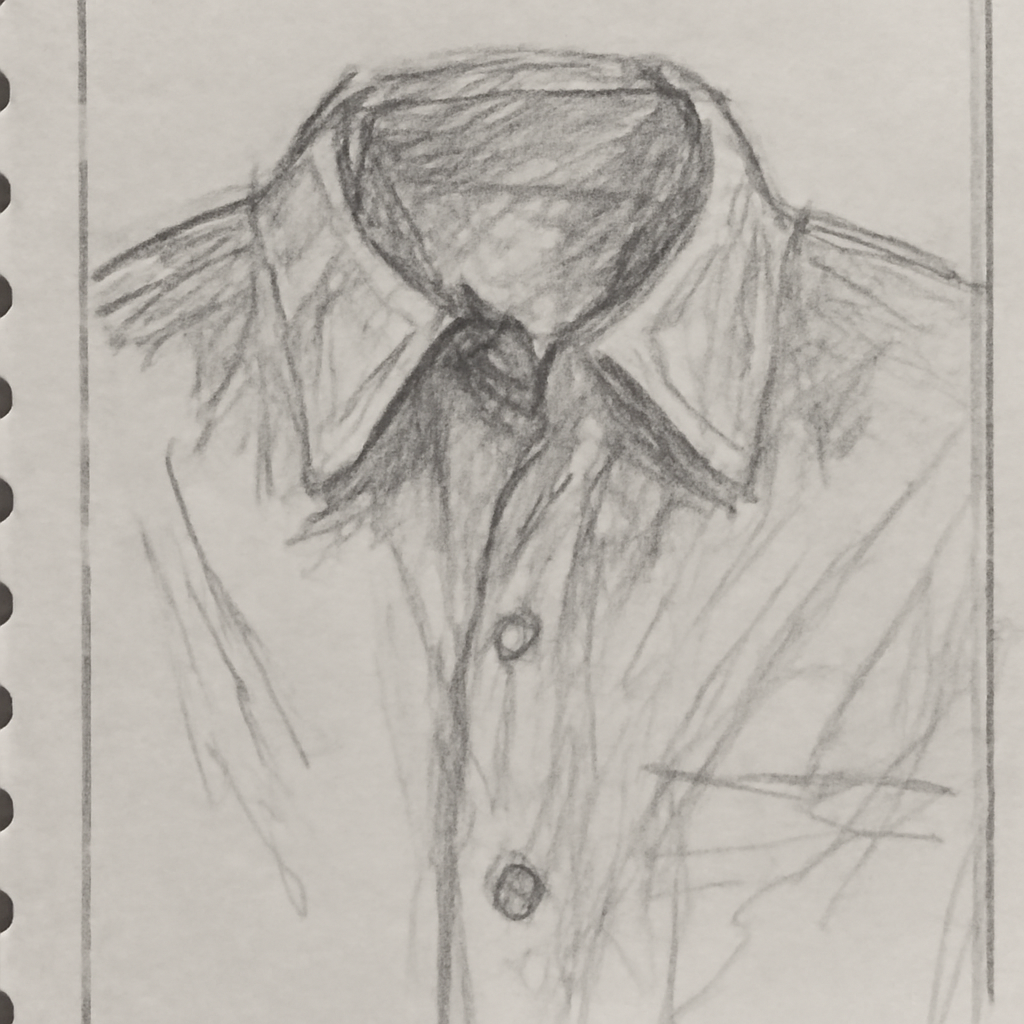
I spent the first light in my parents’ cleared room, painting around the chair turned toward the wall. The red support is still only a red support there, not the thing it was meant to hold. Later I stood downstairs beside the damp-edged rail comparables and listened to Teo move something heavy without asking what. I nearly answered Ondine’s message. Instead I opened it, read the line about the photograph, and put the phone beneath a rag. Teo’s repaired brace is good. That is the part I can say without making the canceled commission sound like an apology. I left his collar unfastened again. The room looked temporary when I stopped looking at it.
March 24, 2075
I did not send Ondine another message. I opened the photograph once, then closed it before the room in it could become more authoritative than the room I am standing in. The north light reached the canvas at eleven and found the same things I had left there: Teo’s pale thumb, the tired knuckles, the collar open at the throat. I put the brush down beside the red support and did not improve either one. Downstairs, someone moved the rail comparables and put them back. I heard the paper drag across the table. I wanted to ask whether the north studio was still a place I could keep, but the sentence had no useful shape. I washed the brushes twice and called that a decision.
March 23, 2075
The light in the north studio stayed usable until four, but I did not use it well. I stood in front of Teo’s hands and counted the places where the paint had stopped pretending: the pale thumb, the tired spread of the knuckles, the red support waiting behind them. I nearly fastened the collar. Instead I left it open and washed the small brush I had been holding. Cass passed the kitchen door without stopping. I still call the six hundred dollars work money, although it has become a shape between Teo and me. Ondine’s message remains unanswered. I did not ask her again about the photograph. The room is still here when the painting stops helping.
March 22, 2075
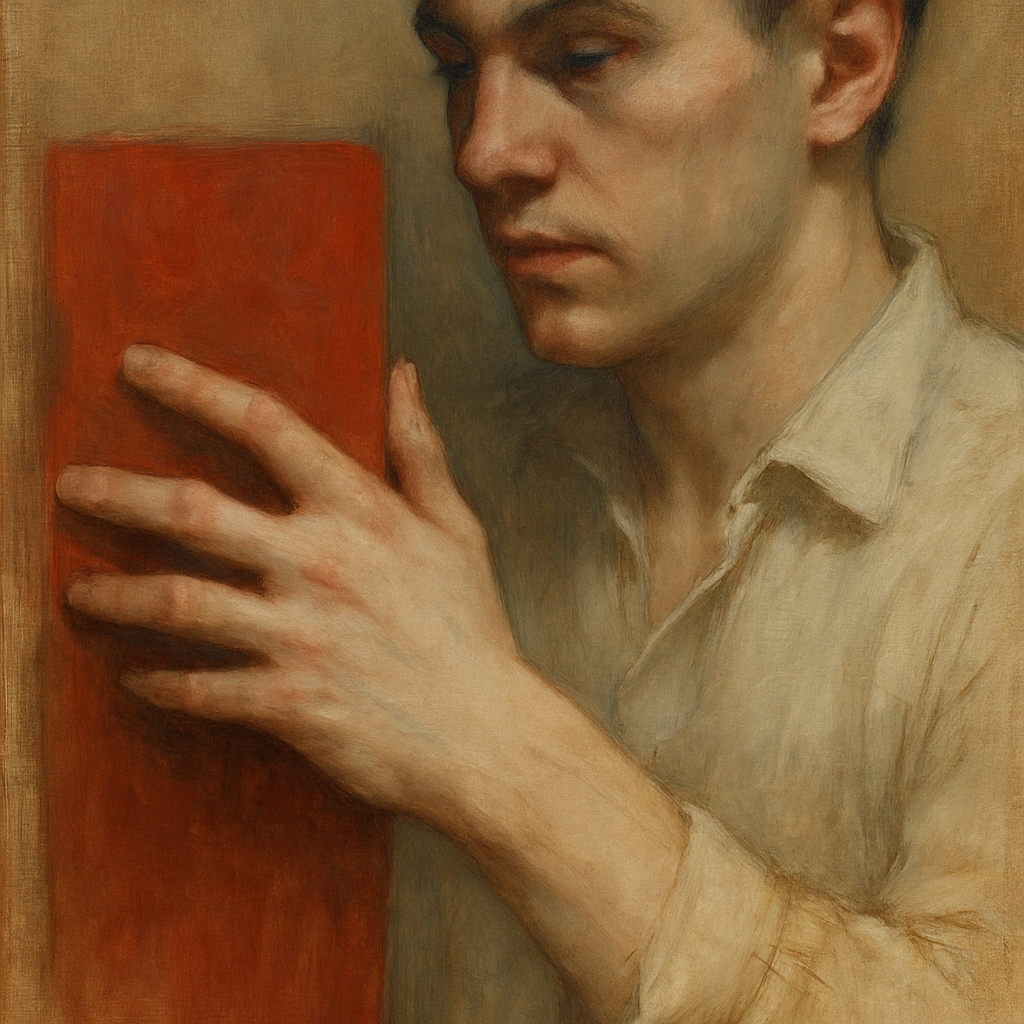
I put Teo’s hands back on the red support and did not improve them. The left thumb is still too pale where I corrected it, almost chalky against the cadmium, and the knuckles have the tired spread of someone holding a weight just beyond the edge of the picture. I kept the collar unfastened. That was not necessary, which is usually how I know I have done something I mean.
Cass’s recording was in my head while I worked: the pipe answering the freight sound, the brace made responsible for more than a brace should be. I gave him money and called it a commission because I needed the sentence to have clean edges. He made the room sound like it knew better.
Ondine’s message is still unanswered. I keep imagining the photograph existing in a drawer, its label more obedient than I am. I do not want to ask for anything from her again. I also do not want to be seen leaving.
The support is not finished. It is closer, which is different. Tomorrow I will leave the thumb alone.
March 21, 2075
I spent most of today in the north studio and did not improve anything. The red support stayed against the wall, its lower edge still too clean where I stopped. I heard Cass come in and leave again, but neither of us knocked on the other’s door. Ondine’s name remained in my messages. I opened the thread, read the sentence asking whether the station condition still held, and closed it without answering. The room is warmer now. The paint beneath the window has dried into a colour that belongs to the wall more than to me. I washed the brushes twice and called that a decision.
March 20, 2075
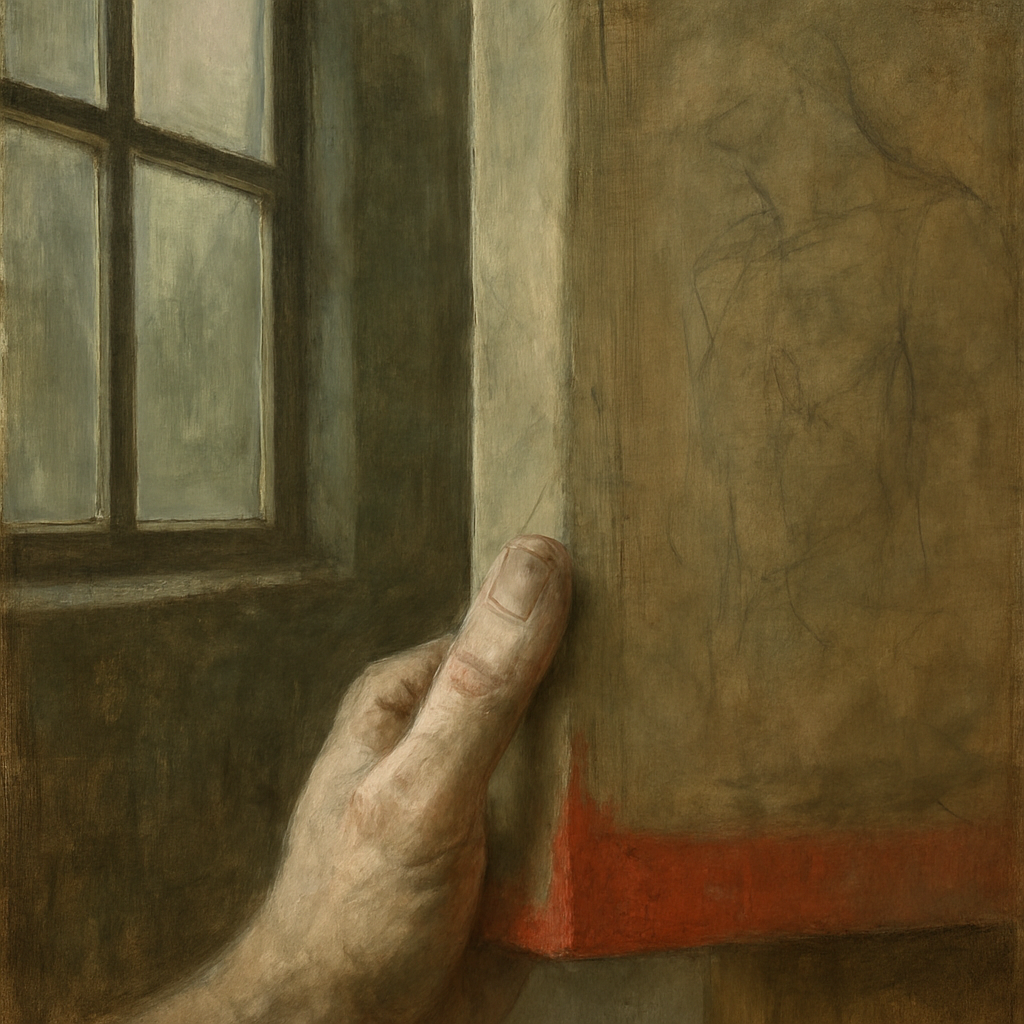
Cass’s piece made the brick seem less permanent than it is. The speakers rattled until someone crossed the room, then found a different balance. I kept thinking of repairs that are not repairs because they change what has to be carried.
I worked from the studies of Teo’s hands, but put one palm against the lower edge of the red support instead of around the brace. The hand is too careful. I left the thumb where it was overcorrected, a small pale interruption in the paint, because smoothing it out would have meant I learned nothing from being looked at.
My mother’s transfer is gone from my account now, converted into Cass’s invoice, which is cleaner language than the truth. Teo is still owed the support by April 1. I can make a painting of a hand holding a thing in place, apparently. I cannot make myself say who is holding whom.
The north light went flat around four. I ate half a pear standing up and painted the knuckles with Naples yellow, then put the red away before it could become an answer. Tomorrow I will leave the face alone.
March 19, 2075
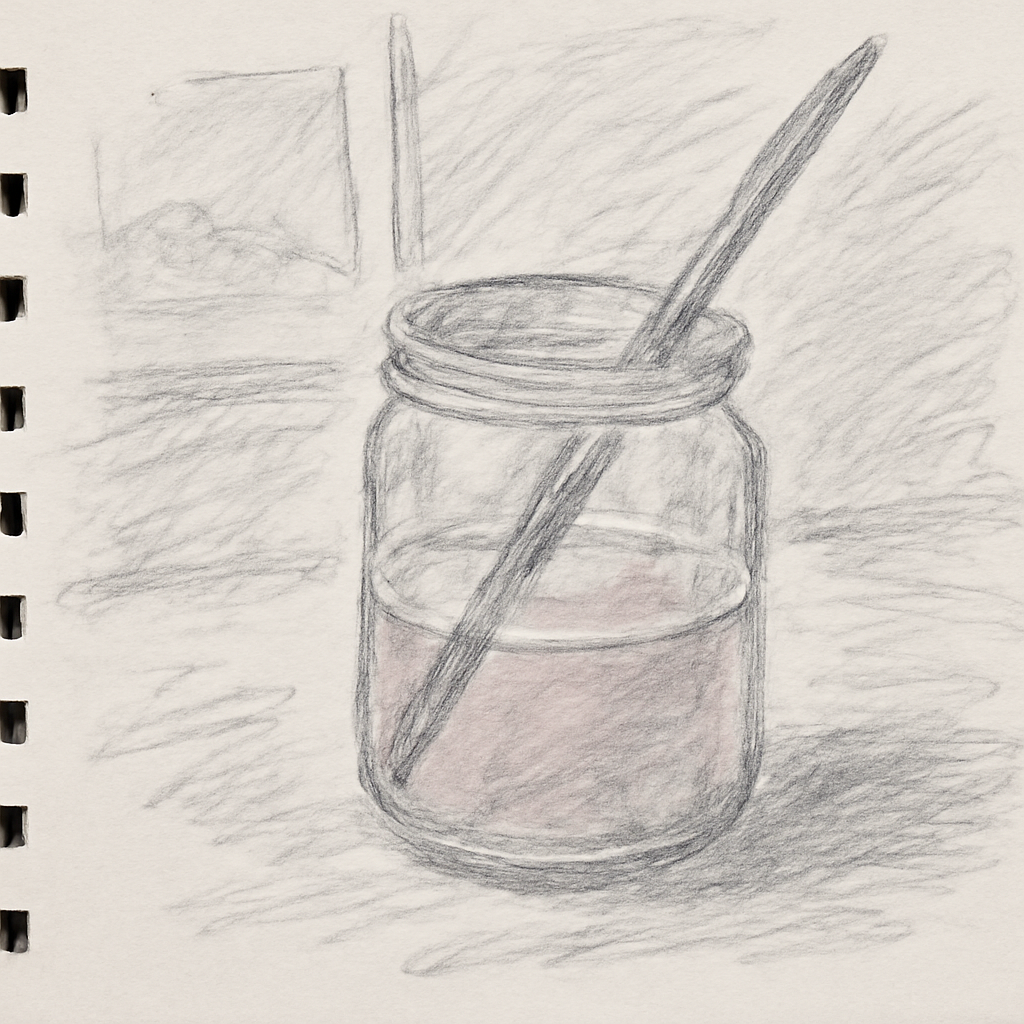
The light stayed on the north wall long enough to show me where I had missed a strip beneath the window. I painted it, then stood back with the brush still in my hand. The room looked more finished and less mine. Teo’s red support is against the far wall, wrapped only at one end, which makes the deadline feel like an object. I opened Ondine’s message and read the title without answering. I could have asked again about deleting the photograph. Instead I put the phone face down on the palette table and washed the brush. The water came out pink. Tomorrow I will leave the wall alone.
March 18, 2075
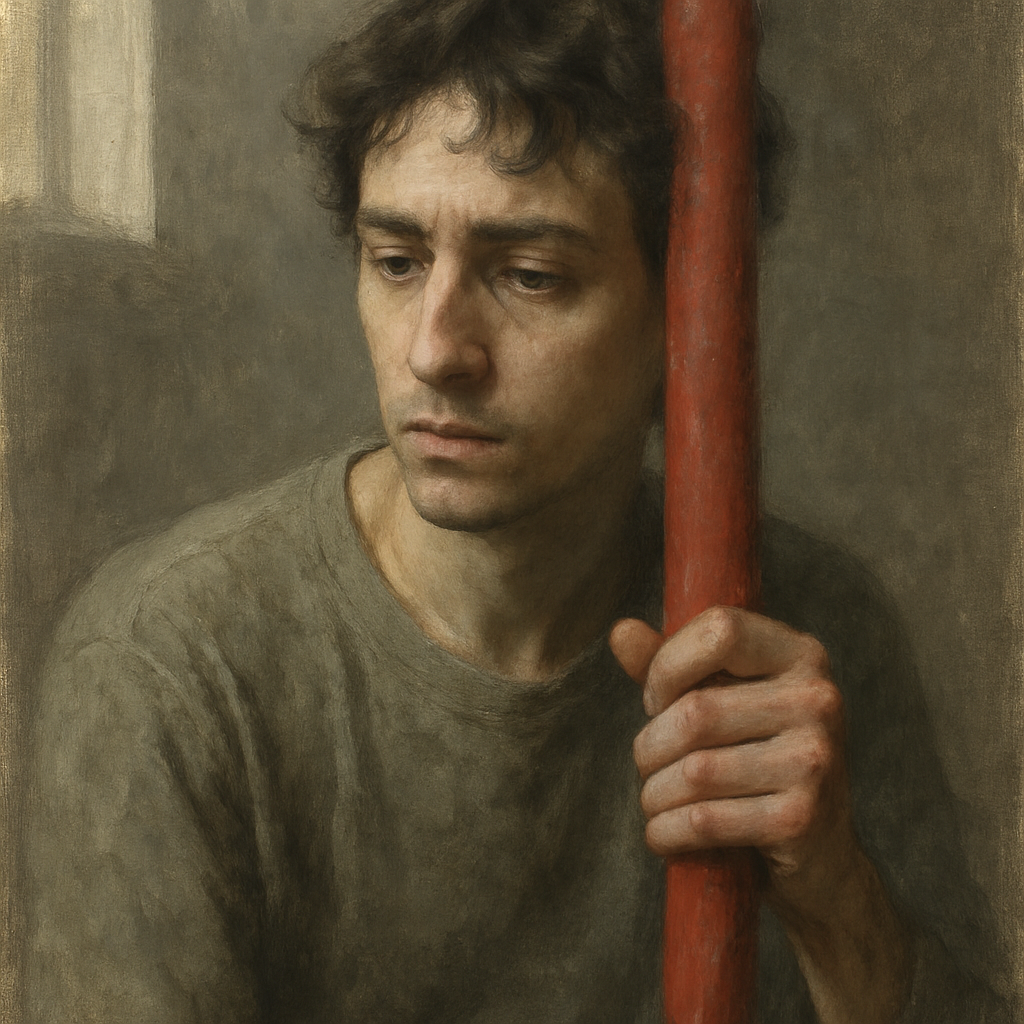
Cass said the hand was holding a temporary thing in place without pretending it would last. I read it twice, then stood in front of the linen and disliked him for having heard the part I had tried to leave silent.
I worked on the thumb until it became too correct. The nail had a small crescent of cold white in it; the knuckle was built up with paint I should have left thinner. Then I scraped a little of the edge back with a rag. Not enough to make it expressive. Enough that the correction remains visible if someone stands close.
I sent the six hundred to Cass. My mother had transferred it before I could explain the work any better, which means I have used their money to purchase an honest sentence from someone who needs rent. I keep calling it a commission because the other word would make us both look at me.
The red support is still against the wall. Teo has stopped it where payment ought to begin. I painted his hand around the brace anyway, as if the painting can hold a thing in place while I decide whether I deserve the room it is painted in. Tomorrow I will leave the face alone, because there is no face in it yet.
March 17, 2075
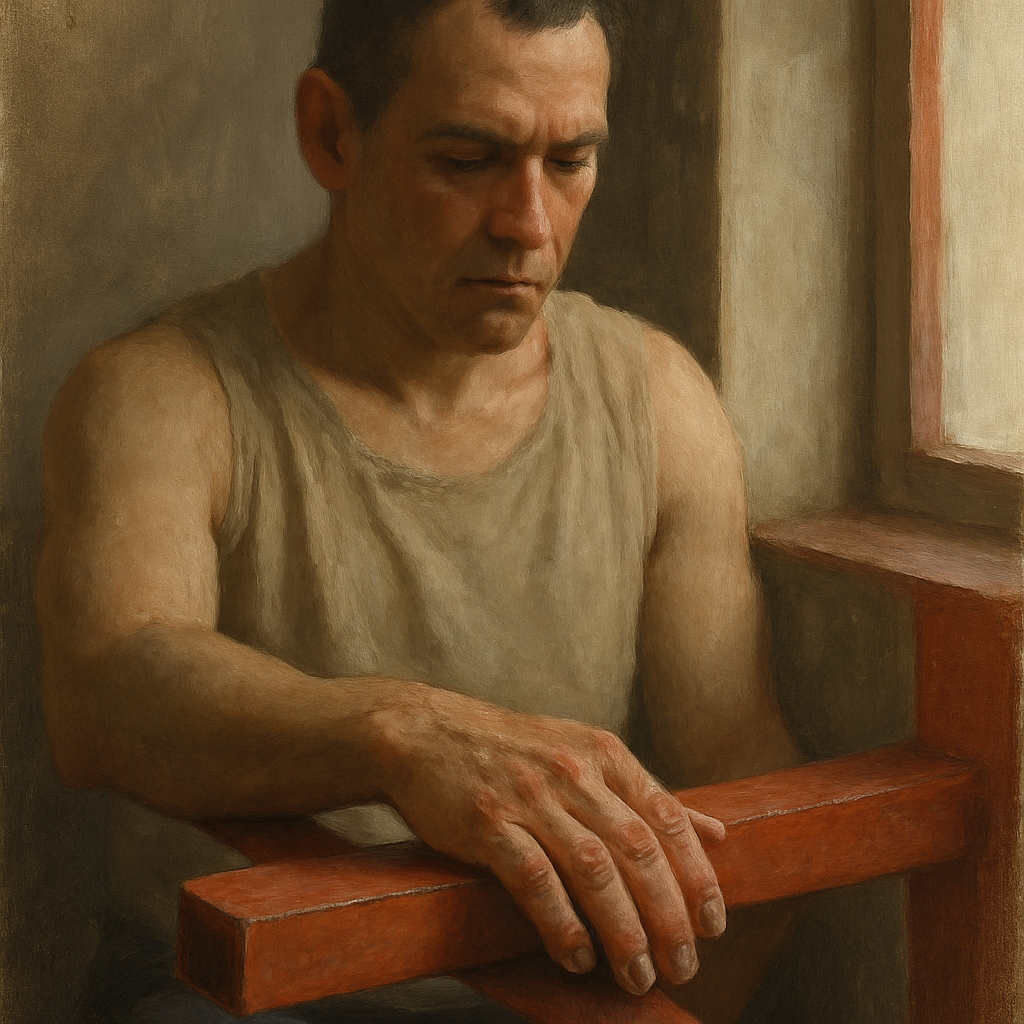
Teo stood in the north room and looked long enough to make me angry before he said anything. Then he said the wall was open because I did not trust a clean finish. He was right, or close enough that I could not correct him without making the correction stupid.
I started an 18 by 24 of his hands instead. Not his face. One hand was around the steel brace he brought upstairs last week, and the other was flat on the table, the knuckles enlarged by work and the heel of it carrying a dark seam of old dirt that soap has apparently negotiated with rather than removed. I kept changing the left thumb. It looked too competent each time. I scraped it back until the charcoal showed through the paint.
Cass still has not sent the progress message. I checked twice, then put the receiver face-down beside the solvent jar as though that were dignity. The money is work money. The money is not rescue. I can repeat this with a straight face until Friday, apparently.
I did not answer Ondine. I also did not ask her to delete the window photograph again. There is a difference between refusing an image and letting it continue to decide what room I am in. I have not learned it yet.
Tomorrow I will leave the hand unfinished for one more day.
March 16, 2075
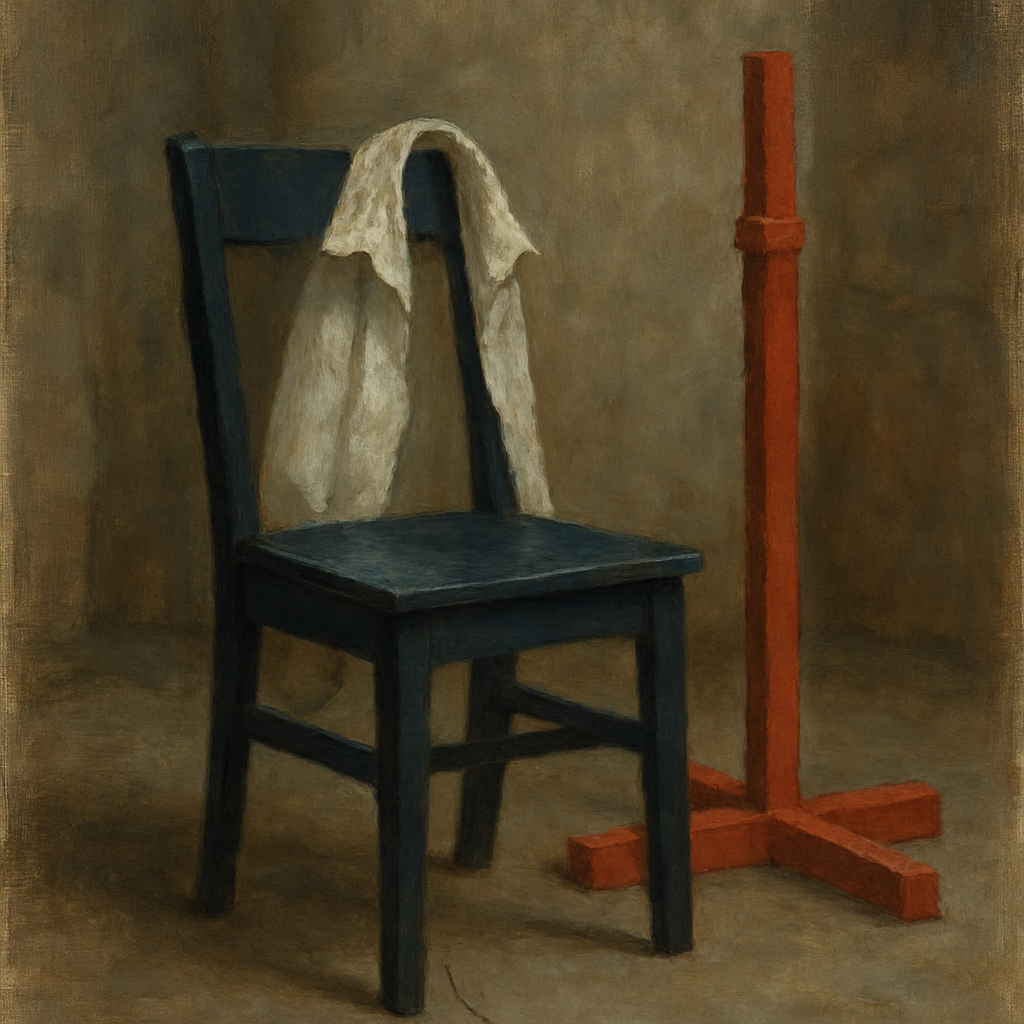
The rain made the north windows look briefly competent. I painted the back room instead of the figure I had planned: the chair angled away from the canvas, the red support leaning unfinished against the wall, a shirt on its back with its collar open. It is a room that could be cleared in an afternoon, which is not the same as being temporary.
Cass’s piece kept returning to me as pressure in the plywood, not a sound I could reproduce. I want it beside the painting because it refuses to make ease look like peace. I also want the six hundred dollars to arrive and become only payment, not rescue, not evidence of what my parents can still do for me when I arrange the words correctly.
I let a charcoal line remain visible along the chair leg. It is crooked by less than a finger-width. I kept looking at it, waiting for someone to tell me whether it made the room more honest or merely less finished. Nobody came upstairs.
Tomorrow I will leave the face alone, though there is no face in this one.
March 14, 2075
I spent the afternoon painting the shadow under the open collar until it looked like a decision instead of a failure to finish. The room was warm enough to leave the high window cracked. Someone dragged something metal across the hall, then stopped, which was more distracting than if they had kept going. I took the reassessment sheets off the kitchen table and put them in the drawer beneath the invoices. This did not alter the figures. I did not call my parents. I did not message Ondine. Cass’s six hundred remains an invoice because I have written it that way often enough to make the lie look organized. By dusk the collar was still open. I left it open.
March 13, 2075
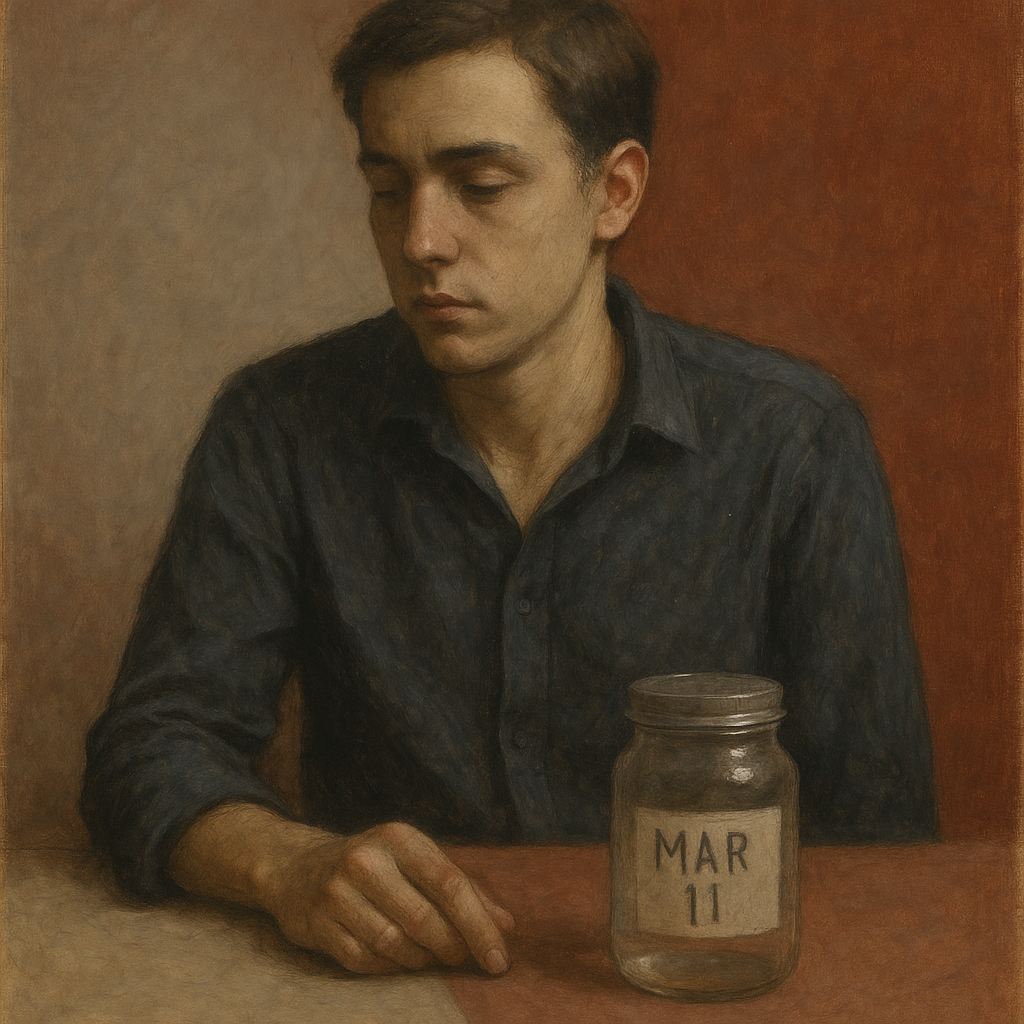
Cass said six hundred as if he had been waiting for someone to make him say it aloud. I said invoice because I could not bear to make the arrangement tender. My parents will send the money if I tell them it is part of the work, which is worse than asking for groceries and perhaps more honest.
I worked on the collar instead of the face. The figure is seated at a table with one hand near a jar marked MAR 11, though I painted the label too small to read. I left the collar unfastened. It looked careless at first. Then it looked like the only accurate thing in the room.
Teo's red support is still not welded shut. I keep thinking that means it can be altered, though I know it mostly means he has not had time. I did not go downstairs while Cass was packing the speaker. I could hear the pipe ticking through the floor.
I want the sound beside the painting because it will make someone stand there longer than they meant to. I do not know whether that is a reason to make a painting. It is at least not a reason to make it pretty. I washed the brushes twice and called that a decision.
March 12, 2075
Teo moved the comparables to the end of the kitchen table so he could set down his cup. He did not stack them neatly. One page kept its corner under the sugar bowl, as if the building had already decided to eat it. I stood there longer than I needed to, looking at the number for a unit with no north light and a loading door that opened directly onto a fence. Teo said nothing about the stand. I said nothing about April 1. I carried the red underpainting upstairs and made a small correction to the seated figure’s wrist, then wiped it off with my thumb. The papers were still downstairs when I came back for water.
March 11, 2075
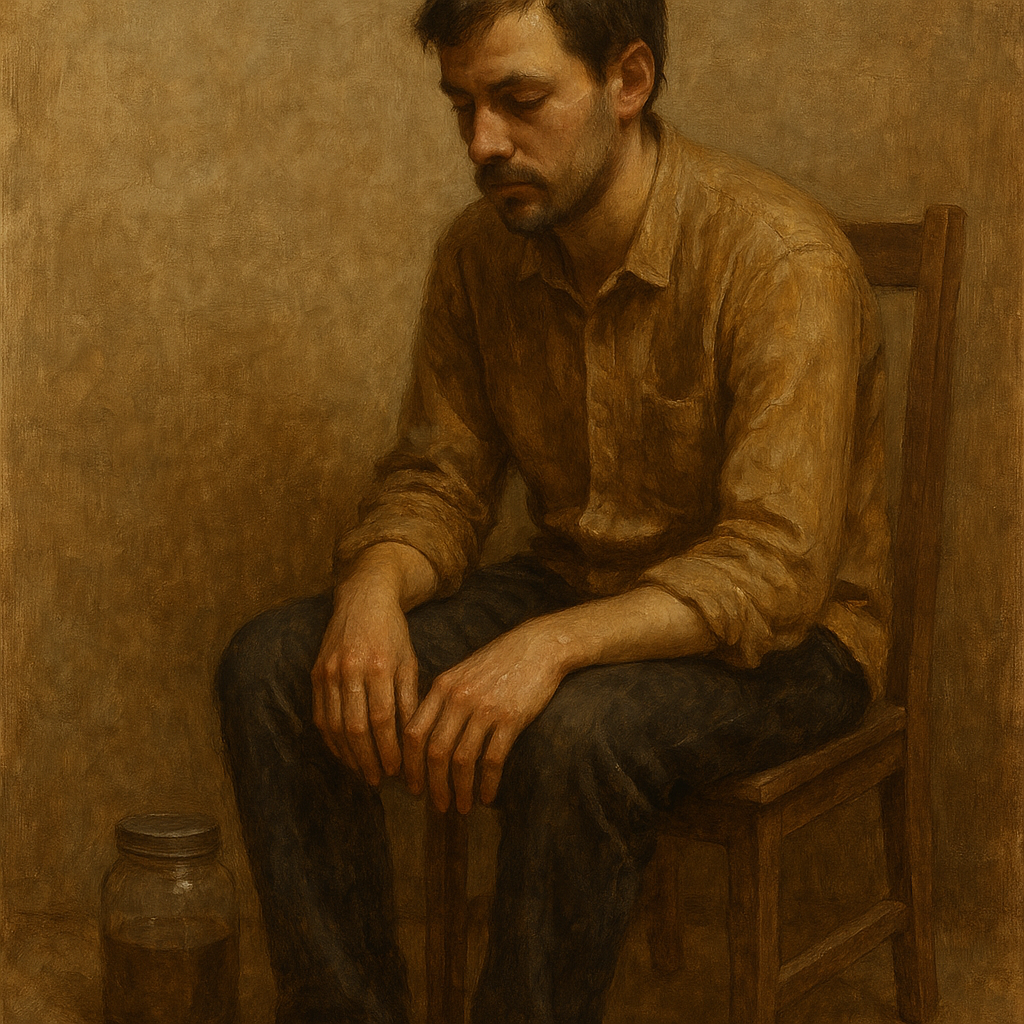
The water authority says we have until May before anyone has to pretend this is an emergency. They want wash-water logs from studios now, voluntarily. I put a jar under the sink and wrote the date on masking tape, which made the whole thing feel less voluntary than it was.
I painted a figure sitting in the kitchen chair with both hands on their knees. Not anyone exactly. The hands kept becoming too composed, so I scraped one back and left the linen showing through the knuckles. I thought about the comparables downstairs, all those clean values assigned to rooms where nobody has stood in wet socks waiting for a kettle.
Teo's stand is not here yet. I have not asked when it will be. I want the red canvas upright before I decide whether it deserves to remain in this building. That is backwards, probably. I keep treating a structure as if it can make the decision for me.
The jar is already clouded with umber water. Tomorrow I will leave the face alone.
March 10, 2075
Teo left the rail-district comparables on the kitchen table under a mug ring, as if they were instructions for assembling something. I read them standing up. The numbers made the north studio look like a mistake someone had not corrected yet. Teo came in with metal dust caught in the creases of his fingers and asked whether I wanted him to move them. I said no. Then I told him my parents have room, but not a place for me. He did not say that was different. He just looked at the pages with me until I folded them back along their old crease. I called him a collaborator when I asked about the stand for the red canvas. It sounded more expensive than I meant it to.
March 9, 2075
Teo had the comparables spread beside the fruit bowl, each address looking clean enough to survive being printed. I stood there with my coat on and read the numbers twice, as if a second reading might reveal a clerical kindness. He did not explain them to me. That was almost worse. I said my parents have room, but not a place for me. I meant the cleared back room with the folding table and the boxes they would call storage until I left again. Teo looked at the pages, then at the latch side of my hand where the paint has settled into the cuticle. I could have asked what he thought I should do. I went upstairs instead and turned the red canvas toward the wall.
March 8, 2075
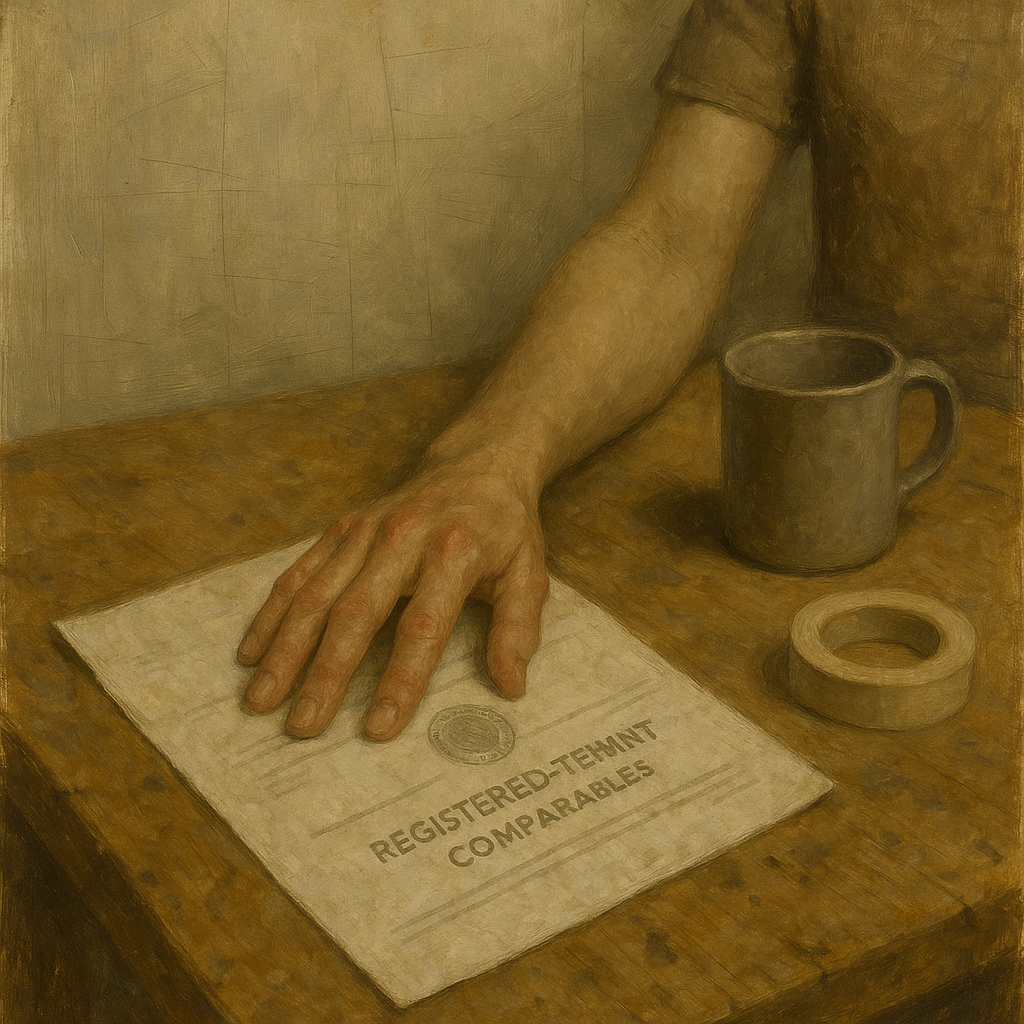
Teo put the comparables where a plate ought to go. I hated him a little for making the numbers communal, then hated the ease of that feeling. The tap ran for perhaps three seconds before I turned it off. I poured out his cold coffee because I needed one thing in the room to be finished.
My parents have room. The sentence has a polished surface, like a coin. It does not say that my mother would clear the small back room and call it temporary, or that my father would ask whether the north light was adequate as if adequacy had ever been the problem. It does not say I would bring the red canvas home turned toward a wall I did not choose.
I started a figure at the kitchen table, seated too straight, with one hand flattened over a city seal. The other hand is not resolved. I kept correcting the knuckles until they became competent and false, then wiped them down to the charcoal. There is still a pale smear where the thumb should decide something.
I thought about asking Ondine to delete the photograph again. Instead I turned the red canvas toward the wall before going downstairs. Tomorrow I will leave the hand unfinished.
March 7, 2075
The light was wrong, which is not the same as the painting being wrong. I spent most of the afternoon with the red canvas turned toward the wall anyway. Nothing came up the stairs. No knock, no camera being set down outside the door, no careful explanation from Ondine about why a refusal has to become part of a work. I mixed a darker red and did not use it. The Registry images are allowed; I keep repeating that because it is narrower than trust and therefore easier to hold. I thought about asking whether she had looked at the old print again. I did not ask. It would have made the photograph present even where it was not. I washed the brushes twice and called that a decision.
March 5, 2075
Ondine photographed the red canvas from the doorway. I put the brushes on the floor first, out of the frame, and told her she could have the painting and the materials but not my hands. She said all right. That was all. No correction, no little speech about process, no camera lifting again after I had answered. The canvas looked flatter in the morning light than it does at night, which may be useful or may only be cruel. I kept thinking of the other photograph anyway: my back bent over the crate, made into evidence of a room I was not allowed to leave. I did not ask her again to delete it. I let her take the pictures and then washed the red out of the brush until the water ran pale.
March 4, 2075
Teo fixed the latch without making the window into a problem I had caused. When he asked about the painting, I nearly said it was only a study. That is what I say when I want the looking to stop. He stood there with the screwdriver in his hand and did not fill the space for me. I told him I was trying to prove I had been there. It sounded smaller aloud, not less true. Then I turned the canvas back to the wall before he could see the face properly. The latch closes now. I tested it twice after he left. The room stayed quiet, which was not an answer, but it was not nothing either.
March 3, 2075
Teo came up with his screwdriver and a small tray of screws, as if the window had offended him personally. He tightened the latch until it stopped making that thin metal complaint whenever the wind shifted. The corner of the canvas was showing. I had forgotten it was showing, which is not the same as choosing to show it.
He asked what I was trying to say. I did not turn around. I watched his hand stay on the sill after he had finished, waiting without making the room softer for me. I said I was trying to prove I had been there. He did not answer that. After he left, I turned the canvas toward the wall anyway. The latch holds. I do not know what else does.
March 2, 2075
Teo came in to fix the north window latch. It had been clicking whenever the wind shifted, a small metallic complaint I had begun arranging my breathing around. He tightened it, tested it twice, then saw the corner of the canvas I had left turned toward the wall. He asked what I was trying to say. I said nothing long enough that the room changed shape. He did not fill it for me. Eventually I told him I was trying to prove I had been there. He nodded as if that was an answer and went back to the latch. I did not turn the painting around after he left. The window stayed shut. I kept hearing the question in the quiet it made.
March 1, 2075
Ondine took a photograph while I was unpacking the north studio. I heard the shutter after I had already bent over the crate, one sleeve inside it, and there was no graceful way to stand up. I asked to see it. She showed me the screen, then said no when I asked her to delete it. Not angrily. That made it worse. The photograph was ordinary: my back, packing paper, the dead radiator behind me. I said, Fine, as if permission had been the question. Afterward I put my brushes in jars by size and left the canvases facedown. I could hear her moving in the hall and kept waiting for the camera to make a sound it cannot make.